Kenya’s Wildlife scenery has created a consistent image of the big five, so often that many at times the other smaller, less known animals became invisible and almost forgotten. Beyond the big five animals, i.e Lion, Leopard, Rhino, Elephant and Buffalo, are other beautiful existing creatures like the Dik dik, Pangolins, Warthogs, honey badgers, and Gerenuk.
From the early 1800s to the 1960s, the big five became a term that gained popularity among the colonialists. These hunters rated animals based on their difficulty of pursuing and killing them on foot. Lions, Rhinos, Elephants, Buffaloes and Leopards appeared on their top five list and have since become a sensational word that arouses emotions, needs, and curiosity among people of different nationalities.
The basis of this blog is to help you gain a better understanding of each of these almost forgotten beings and, in turn, allow you to appreciate nature. We also need to understand that we live in an ecosystem that is fully dependent and functional on each other. With a break or malfunction of one or more components, the whole cycle becomes completely dysfunctional.
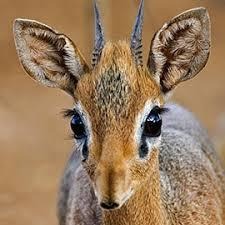
Dik dik
Introducing you to the dik-dik–one of the loveliest safari secrets in Kenya. This small antelope is no more than 30-40 centimetres tall and is called so because it whistles the sound of dik-dik when it is frightened. It is the smallest and one of the most charming antelopes found in the world with large expressive eyes and a tiny, elongated nose. It is a small animal but has a large place in the ecosystem. It works to trim the vegetation, it is prey to larger carnivores, and it demonstrates the complexity of life in the wild. The big eyes, long noses and soft movements of dik-diks will make us remember that a safari is not only about seeing lions and elephants, but also seeing little things that make Kenya special.
Pangolins
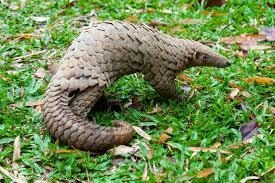
The pangolin, sometimes known as the “scaly anteater,” is one of the most elusive and fascinating creatures in Kenya. Covered in protective scales of keratin, this nocturnal mammal eats almost exclusively ants and termites on their long sticky tongue. When threatened, it rolls up into a tight ball which makes it almost impossible for predators to harm it. Unfortunately, pangolins are also one of the most trafficked mammals in the world due to illegal trafficking market for their scales and meat. In Kenya, pangolins are very rare, but can occasionally be found in places such as the Tsavo National Park, Maasai Mara, Amboseli and private conservancies keeping the vulnerable species safe. Seeing any in the wild is considered a once disadvantage time to time life experience safari. Protecting pangolins is an important part of the conservation story in Kenya but helps to remind us that not all safari treasures are easy to spot-they are not always given to us with sharp teeth or horns, sometimes, the quietest creatures are the most extraordinary.
Warthogs
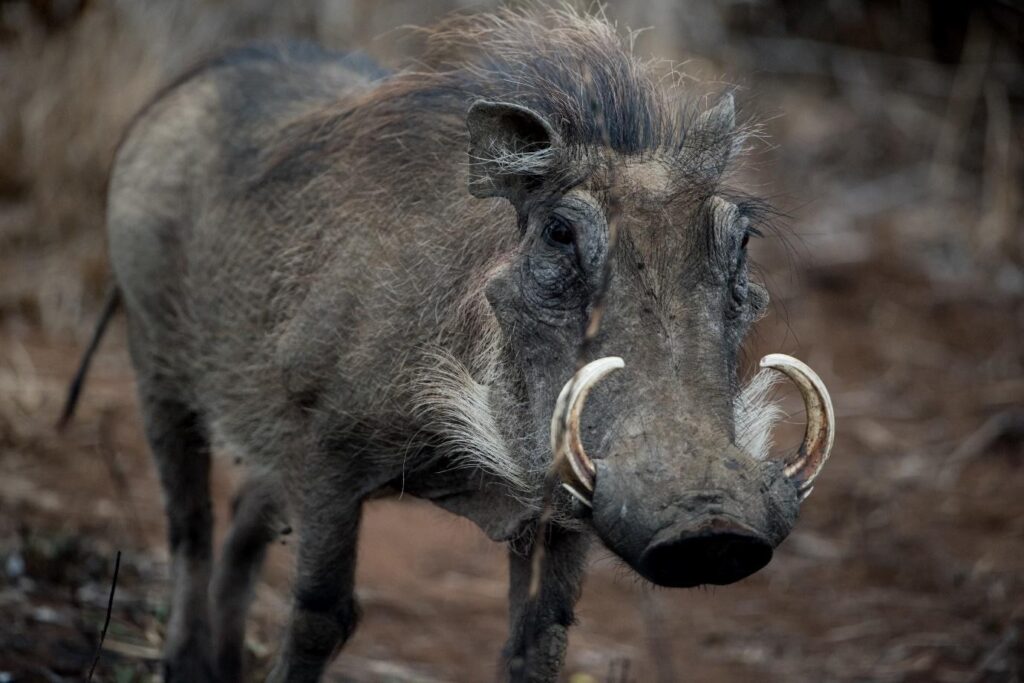
The warthog is nicknamed “comedian of the savannah” because of its quirky looks and funny behaviour. Its tusks are curved upwards, it has a scruffy mane, and it has these “warts” on its face that give it an appearance of toughness at first glance, though it is not terribly fierce. But watch it for a few moments and you can easily understand why it is a favourite on safaris. Warthogs love to trot with their tails sticking straight up like little flags—an adorable signal to other warthogs in the group. They feed in a quite unique way, often going down on their front legs to munch on grass and roots. When danger approaches, they are able to dash backwards into burrows, where their tusks are ready like little warriors. From Nairobi National Park to Maasai Mara, warthogs are everywhere in Kenya and can bring humour and personality to the safari scene.
Honey badgers
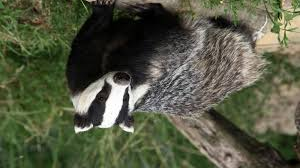
The honey badger, also known as the ratel, is one of the toughest animals in Africa. Though small, it has a huge attitude. Honey badgers are fearless predators, and they tackle their prey without any fear of issues that are much larger than themselves, including lions. Their thick, loose skin and sharp claws allow them to work their way out of a predator’s grip and fight back with surprising power. The name is derived from their habit of raiding bee hives to get at honey and larvae, and are commonly followed by the honeyguide bird that leads them to the hive. In Kenya, the badgers are found in areas like Tsavo, Samburu and Maasai Mara. They are shy, mainly nocturnal animals, and so sightings are rare and exciting. More than legends of the gamey shore safari, honey badgers are an example of resilience and courage. Some people might see a great white shark and think that a great white shark is a big animal, but when you see one in the wild, you can see that there are some things which can be bigger than you but are still capable of being more daring.
Gerenuk
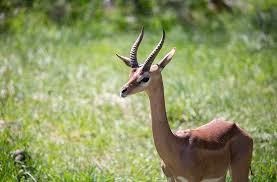
The gerenuk and also the giraffe gazelle, is one of the most characteristic antelopes of Kenya. It has a skinny neck, long legs and huge eyes, its head looks like something between a gazelle and a giraffe. What distinguishes the gerenuk is its unique way of feeding. Unlike most antelopes, it stands up vertically on its hind legs to access to leaves and shoots high up on bushes and trees. This unusual ability is helps it survive in semi-arid regions where food is scarce. You’ll find the gerenuks in clockwise order of north: in Samburu; Meru; Tsavo East. They are a rare and elegant sight on the safari.
The name is Somali for “giraffe-necked,” “garanuug.” Gerenuks are gentle giants, preferring to live apart from each other, but should be able to see danger from a long way away thanks to their sharp eyesight. Seeing a gerenuk is like discovering one of nature’s secret masterpieces – it is a further reminder that all animals on safari have their secret for surviving.
The Mountain Bongo
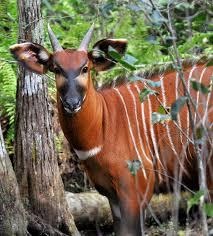
Kenya has one of the most beautiful but endangered antelopes, the Mountain Bongo. It is a rare treasure of the wood with its dark chestnut coat with its long white stripes, curling horns, and kindly eyes. Most antelopes that inhabit open plains do not reside in such areas, but the Mountain Bongo is found in the highland forests of Kenya, particularly in the Aberdare Ranges, Mount Kenya, and certain sections of the Mau Forest. This timid and sly animal prefers feeding mainly at sunset and dawn on leaves, bark and herbs. Regrettably, less than 100 of Mountain Bongos can be found in the wild thus becoming one of the rarest species of the antelopes on Earth. Kenya conservation agencies, such as Kenya Wildlife Service and Mount Kenya Wildlife Conservancy, are trying their best to conserve and reintroduce them to their areas of habitat.
The ability to see a Mountain Bongo in the wild is the near magic experience because it is a sign of Kenya natural beauty, strength, and the necessity to preserve the forests and ensure the existence of generations to come.
The Aardvark
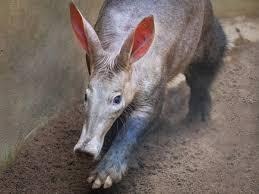
The Aardvark is a nocturnal animal that is the most mysterious and least seen in Kenya. It derives its name from the Afrikaans word “earth pig,” and although it might seem to resemble a combination of a pig and an anteater, it belongs to its own category.
The Aardvark, with its long snout, strong claws, and sharp nose, spends the night digging his own grave full of ants and termites, the primary food on his menu. Aardvarks are also good excavators and can dig as quicker than most predators can run after them. They excavate severe tunnels which turn out to be habitats of other wild animals such as warthogs and hyenas. They are extremely elusive, nocturnal creatures, and are difficult to find though they occur throughout Kenya especially in Tsavo, Laikipia and Amboseli. The sight of an aardvark in the wild is a real safari treasure, a reminder to Kenya that its wilderness is full of unexplored wonders that can be encountered at night.
The striped hyena
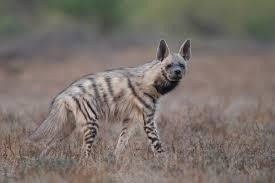
The striped hyena is the silent scavenger of Kenya, the timid and solitary relative of the more well-known spotted hyena. It has a long mane, pointed ears, black stripes along a sandy-grey coat, and is easy to identify but hard to spot. Striped hyenas also use soft whoops and strange howls to communicate, unlike the vocalisations of spotted hyenas, which we hear laughing.
They are mostly scavengers, feeding on carrion, bones, and remains of other predators, with small animals and birds also part of their diet. Striped hyenas inhabit semi-arid and rocky regions, including Tsavo, Samburu, and parts of the Rift Valley, playing a vital ecological role by cleaning up the environment and preventing disease spread. The striped hyena is a Kenya wildlife hero without a handshake; in an unfair and unjust society, the striped hyena is no longer a stranger but one of the wildlife heroes Kenya can boast of.
The Caracal
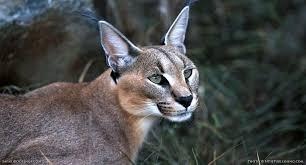
Caracal is a very graceful and mysterious wild cat of Kenya. Sleek and with muscles, and reddish-gold, with ear tufts that really are black, it is frequently confused with a lynx–but it is a species of its own, quite suited to the conditions of Africa.
It is named after the Turkish word karakulak which translates to black ear, referring to its stylish trademark appearance. Caracals are good hunters that are extremely agile and powerful. They are can jump to a maximum of three meters into the air to take birds on the fly and creep silently on small mammals and reptiles.
They are mostly nocturnal and very secretive and can be found in Kenya in dry savannahs, semi-deserts, and bushlands- Tsavo, Samburu, Laikipia and the Maasai Mara.
It is a unique and uncommon experience to spot a caracal on a safari, a burst of reddish fur and piercing eyes and total motionlessness. This evasive cat also helps us to remember that Kenyan wild beauty lies not in the large predators only, but in the graceful hunters, which silently move in the shadow.